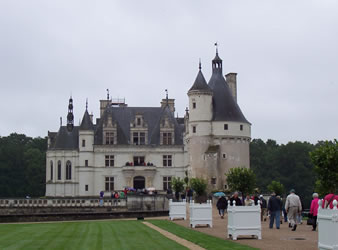
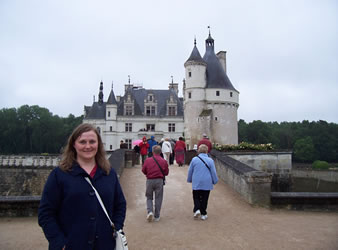
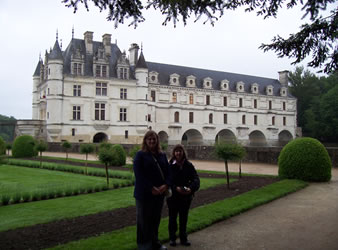
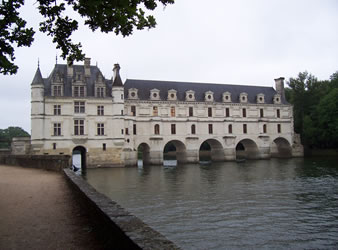
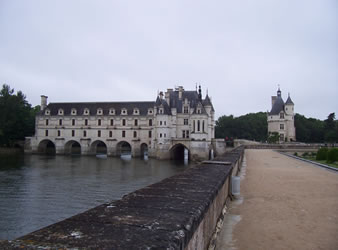
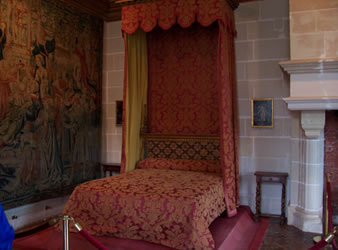
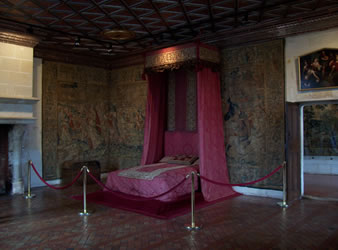
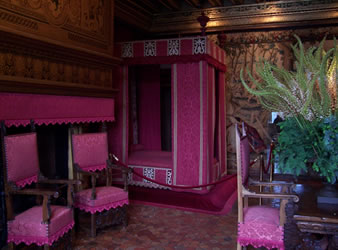
The next château we visited was Chenonceau.
This castle was built over the River Cher; it literally
crosses the river like a bridge. The original manor
was owned by a private residence, but was acquired by
King Henry II as a gift for his mistress Diane de Poitiers.
She had the arched bridge constructed, joining the château
to its opposite bank. She then oversaw the planting
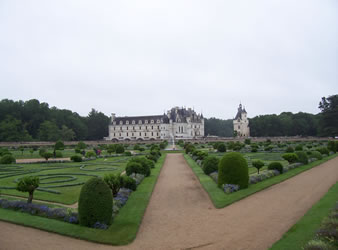
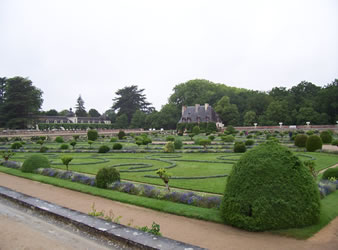
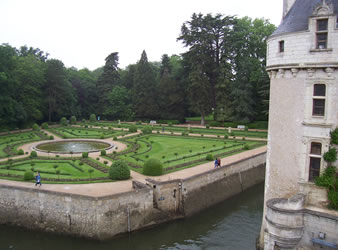
of extensive flower and vegetable gardens along with
a variety of fruit trees. Set along the banks of the
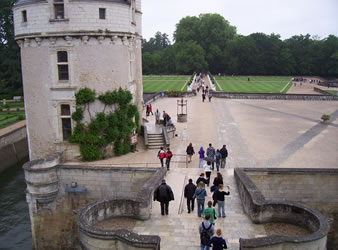
river, but buttressed from flooding by stone terraces,
the exquisite gardens were laid out in four triangles.
The queen Catherine de Medici always wanted that château,
and after Henry’s death in 1559, she tricked Diane
into trading Chenonceau for Château Chaumont,
a drafty, dank castle where Diane only lived a short
while. Queen Catherine then made Chenonceau her own
favorite residence, adding a new series of gardens.
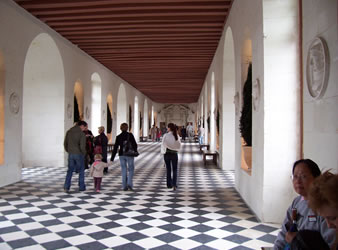
She also added new features to the building, such as
the grand gallery, which was built on top of the bridge
Diane had constructed earlier.
Because of the rivalry between Diane de Poitiers and
Catherine de Medici, this castle is known as the Chateau
of the Ladies. It is the most popular château
in this valley.
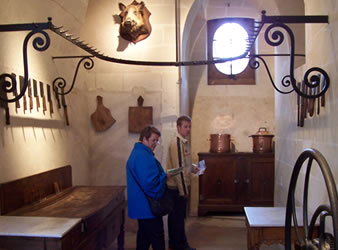
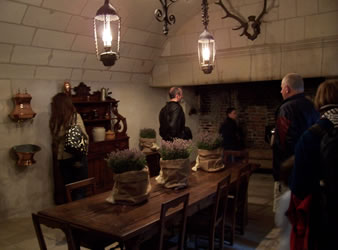
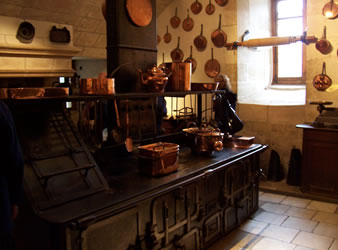
One interesting thing about this castle: the kitchen
was built in one of the supporting pillars in the river.
Usually kitchens were built in structures outside the
castles in case of fires, so this castle was unusual
for its time.
Another interesting tidbit of information: The mistress
of the king was not called this "mistress".
She was called his "favorite". Diane de Poitiers
was 20 years older than King Henry II, but they say
when she died in her late 60s, she looked like she was
in her 30s. The queen has all the rights of power, but
usually does not hold her husbands affection. This was
the case with Catherine de Medici. She was madly in
love with her husband, but King Henry II was madly in
love with Diane. They say that is why she took back
Chenonceau after Henry died.
|